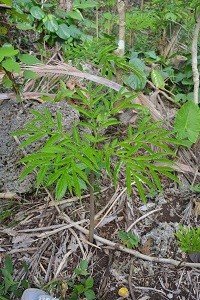
Pungapung (Tag.)
Amorphophallus paeoniifolius (Dennst.) Nicolson
SkinA perennial, stemless herb. Height: 1 meter or more high Leaves: Leaves are usually solitary, the blades up to 1 meter in diameter, trisected, the segments dichotomous, the ultimate ones pinnately divided into oblong to oblong-obovate, acuminate lobes. Flowers: Spathe is sessile, broadly campanulate, dull-purplish, the margins somewhat spreading or recurved, waved and crenulate, up to 30 centimeters in diameter. Spadix (a spike of flowers contained in the spathe) is hardly longer than the spathe, the appendage ovoid, variously sulcate or depressed, up to 15 centimeters long, are malodorous when flowering. Fruits: Not provided
Medicinal Uses & Benefits
Unexplained illness or maladies caused by witchcraft like daot, paktol, barang, hilo. Preparation: Get the roots, wash and chop into small pieces. Put it in a bottle, mix with lana or coconut oil and let it soak. Part used: Roots | Hubag (boils). Preparation: Pound 3-5 leaves and squeeze to extract the juice.. Part used: Leaves
Preparation
Get the roots, wash and chop into small pieces. Put it in a bottle, mix with lana or coconut oil and let it soak | Pound 3-5 leaves and squeeze to extract the juice.
Location & Habitat
Research
Additional Images


Quick Info
- Scientific Name
- Amorphophallus paeoniifolius (Dennst.) Nicolson
- Local Name
- Pungapung (Tag.)
- Family
- Araceae
- Category
- Skin
- Collected By
- Jovencio M. Manga (healer); Cesario P. Orong (mangalalap); Edwin D. Castillon (mangalalap)
- Date Collected
- Jul 27, 2018